Why 'Rent' Isn't the Whole Number
When you're comparing housing options near UT Austin, it's tempting to sort by the number on the listing and stop there. But advertised rent is only one line in a much longer monthly budget. Where you live determines whether you need a car, how much you spend on gas, parking, and insurance, how your utility bills are structured, and even how much you end up spending on food and errands simply because everything is farther away. Two apartments with the same rent can cost renters very different amounts once transportation and utilities are added in. That's especially true in a city like Austin, where neighborhoods a few miles apart can have wildly different walkability, transit access, and car-dependency. Before locking in a lease near UT Austin, it's worth pricing out the full picture — not just the number at the top of the listing, but everything that number doesn't include. Below is a breakdown of four commonly compared areas: West Campus, North Campus, Riverside, and Downtown, followed by what actually changes the math.
West Campus: Premium Proximity, Premium Price
West Campus sits directly against UT Austin's western edge, and that proximity commands a premium. Rent here tends to run at the higher end of the university-adjacent market, driven by dense demand every August as leases turn over on the academic calendar. The upside is genuine: most addresses are walkable to campus, and many day-to-day errands are within a few blocks. The tradeoff is competition — units lease up early, prices rise accordingly, and the area's density means parking, noise, and turnover-season crowding come standard. If closeness to campus is the only variable that matters, West Campus delivers it, usually at the highest rent bracket of the areas compared here.
North Campus: Slightly Lower Rent, Car Often Needed
North Campus offers a quieter, more residential feel than West Campus, often at a modestly lower rent. The tradeoff shows up in transportation. The added distance means many North Campus renters end up relying on a car, a bike for longer stretches, or a bus route to reach both campus and downtown reliably. Car ownership in a city like Austin isn't free — insurance, gas, and parking add up as a recurring monthly cost that doesn't show up on the lease itself. Renters comparing North Campus to a more walkable option should factor that added transportation cost into any 'cheaper rent' comparison, because it often narrows or erases the gap.
Riverside: Lower Rent, Higher Transportation Cost
Riverside has long marketed itself as the budget-conscious alternative for renters priced out of campus-adjacent housing. Advertised rents can look attractive on paper. But Riverside sits farther from both UT Austin and downtown, and its walkability is materially lower than the areas closer in. That distance usually means a car, a longer bus commute, or regular rideshare spending to reach campus, work, or downtown life — costs that eat into whatever was saved on rent. For renters without a car already, Riverside's lower sticker price often comes with a transportation bill that resets the total closer to what a more walkable neighborhood would have cost outright.
Downtown / Capitol District: Walk Score 96 Changes the Equation
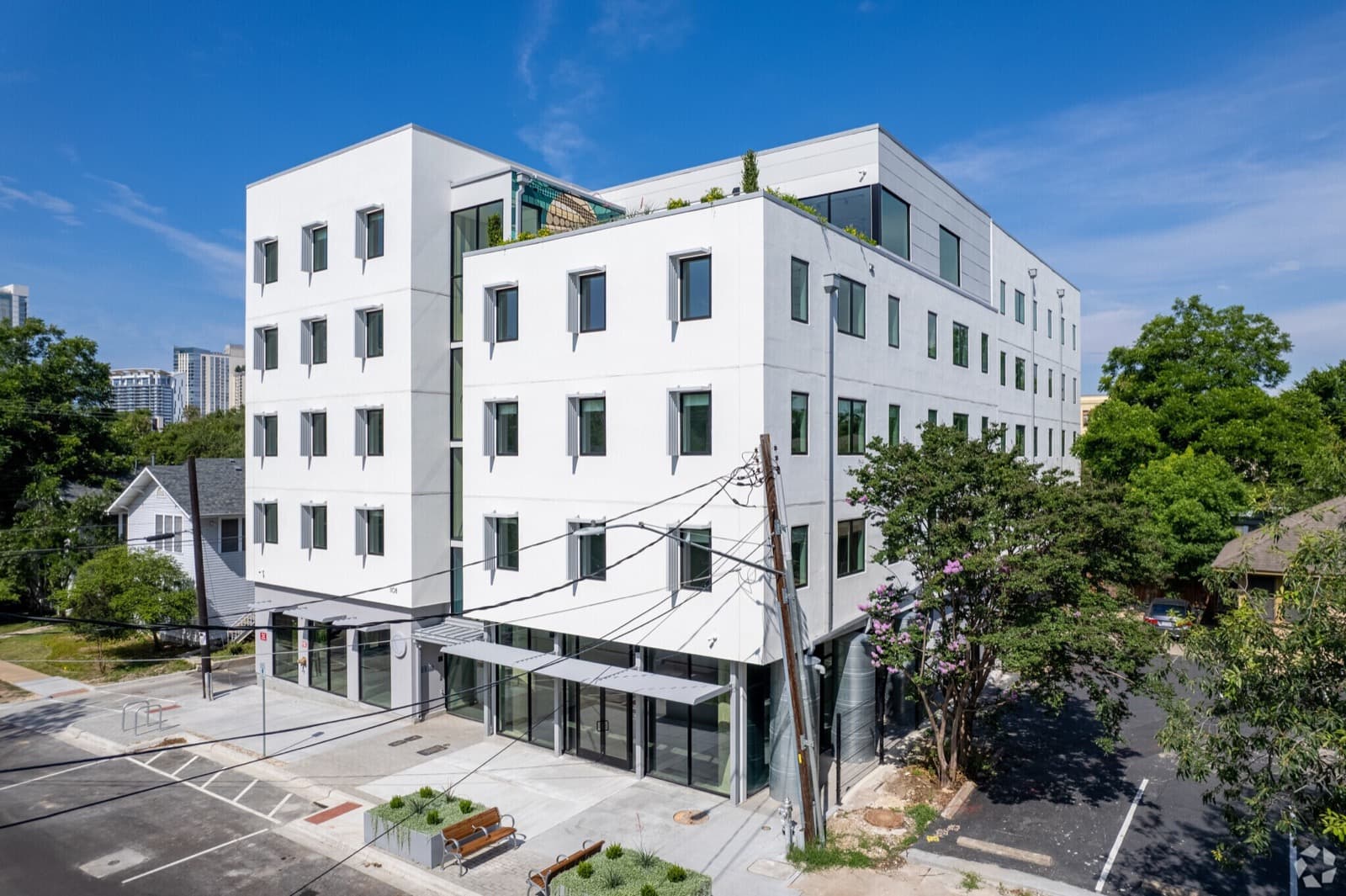
Downtown Austin, and specifically the Capitol District, plays by different rules. The Capitol Living, at 1108 Nueces St, carries a Walk Score of 96 (a Walker's Paradise), a Bike Score of 91, and a Transit Score of 72 — and sits 0.8 miles from UT Austin. At that level of walkability, a car becomes optional rather than assumed, which removes an entire category of monthly cost that shows up in the North Campus and Riverside comparisons above. Downtown Austin studios average around $1,950 per month (RentCafe, RentHop, June 2026) — a figure that typically buys a small, single-occupant unit with no shared common space. The Capitol Living's structure is different: a 4-bedroom, roughly 1,000-square-foot apartment leased as a whole unit, with up to four residents living there together and arranging the internal cost split between themselves. It isn't a like-for-like line-item comparison to a studio, but it changes what 'total monthly cost near UT Austin' actually looks like once transportation is removed from the equation.
The Real Comparison: Total Monthly Cost
Line up all four areas side by side and the picture shifts:
- West Campus: highest rent bracket, walkable, minimal transportation cost, high turnover-season competition.
- North Campus: moderately lower rent, but often requires a car or reliable transit for daily life.
- Riverside: lowest advertised rent, but the highest added transportation cost of the four.
- Downtown / Capitol District: Walk Score-driven car-optional living, rent that includes internet/WiFi, gas, water, and wastewater (electricity billed separately), and a different lease structure built around a shared whole-unit apartment.
None of these are 'wrong' choices — they fit different priorities. But the sticker rent alone doesn't tell you what you'll actually spend each month, especially once transportation, utility bundling, and lease structure are factored in.
Why a Shared Whole-Unit Lease Changes the Math
A studio rents to one person under one lease. A shared 4-bedroom apartment like The Capitol Living rents to a group under one lease — the building holds a single lease for the entire roughly 1,000-square-foot unit, and the residents living there arrange how the apartment's total cost is split between themselves. That's a structurally different arrangement than signing four separate one-bedroom leases scattered across a city, each carrying its own deposit, application fee, and utility setup. It's also different from a solo studio, where every dollar of rent, every utility bill, and every square foot belongs to one renter alone. Combined with a walkable downtown address that removes the need for a car, and rent that already bundles internet/WiFi, gas, water, and wastewater, the total monthly cost equation near UT Austin looks meaningfully different once you compare more than just the top-line number. See how a 3-month minimum lease factors into that same comparison.
Frequently Asked Questions
Is Downtown Austin more expensive than West Campus?
Advertised downtown studio rents (around $1,950/month per RentCafe and RentHop, June 2026) can be comparable to or higher than West Campus studio rents, but downtown's Walk Score of 96 typically removes the need for a car, which is a real monthly cost West Campus renters don't always avoid. Comparing total monthly cost, not just rent, gives a clearer picture.
Do I need a car if I live near UT Austin?
It depends on the neighborhood. West Campus and Downtown are walkable enough that many renters go car-optional. North Campus and Riverside sit farther out and typically require a car, bike, or reliable transit for daily life near campus and downtown.
What's included in The Capitol Living's rent?
Rent includes internet, WiFi, gas, water, and wastewater. Electricity is billed separately. The apartment is leased as a whole unit, not by the room.
How far is The Capitol Living from UT Austin?
The Capitol Living sits 0.8 miles from UT Austin, 2 blocks from the Texas State Capitol, and 0.6 miles from Dell Medical School, with a Walk Score of 96.