Two Very Different Austin Personalities
Ask ten Austinites where to live and you will get two very different answers depending on what they value most. East Austin has built a reputation as the city's creative engine — a patchwork of taco trailers, independent galleries, live-music dive bars, and a food scene that regularly draws national attention. Downtown Austin, by contrast, is built around proximity: the Texas State Capitol, the University of Texas campus, Dell Medical School, and the office towers and courts that keep the city running are all within a short walk of each other.
Neither neighborhood is objectively "better." They serve different rhythms of life. This comparison is meant to help you weigh culture against convenience honestly, so you can pick the one that actually fits how you plan to use your time.
The Culture Case for East Austin
East Austin's identity is built on independent businesses. You will find some of the city's most talked-about restaurants tucked into converted bungalows and shipping-container food courts, alongside a dense concentration of music venues that lean rock, funk, and DJ sets rather than the tourist-heavy stretch of Sixth Street. Murals and studio spaces give parts of the neighborhood a visibly artistic character, and weekend markets and pop-ups add to a sense that the area is always in motion.
If your ideal weekend involves discovering a new restaurant, catching a small-venue show, or spending an afternoon gallery-hopping, East Austin delivers that experience in a way few other parts of the city can match. It rewards residents who are willing to explore on foot, bike, or rideshare within the neighborhood itself.
The Convenience Case for the Capitol District
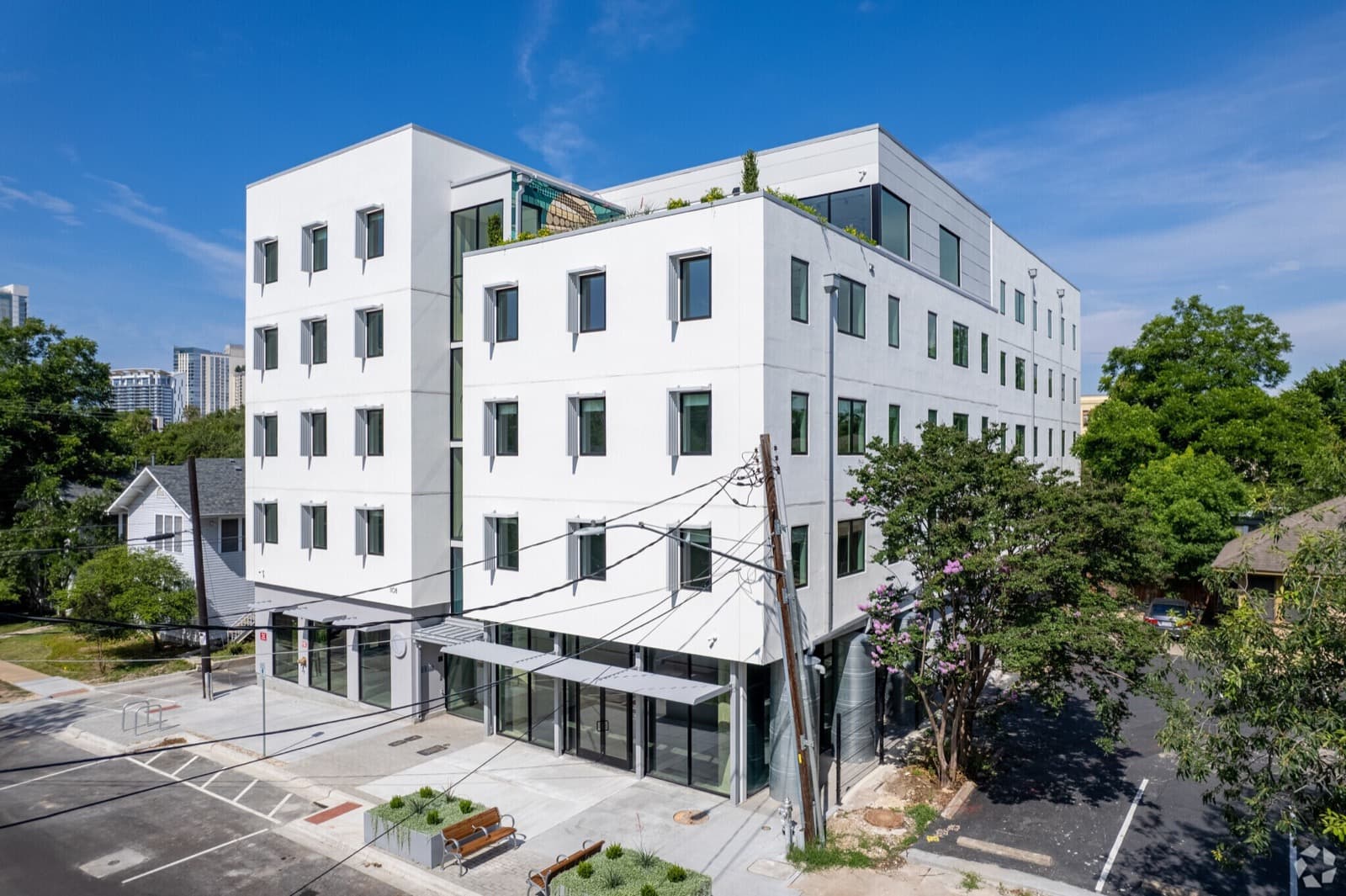
Downtown's strength is structural rather than cultural: everything you need for a working or studying life sits within a few blocks. Capitol Living, for example, is located two blocks from the Texas State Capitol, roughly 0.8 miles from the University of Texas at Austin, and about 0.6 miles from Dell Medical School — all distances you can cover on foot without planning around traffic or parking. The building carries a Walk Score of 96, a Bike Score of 91, and a Transit Score of 72, numbers that reflect just how much of daily life is reachable without a car.
That kind of centrality changes the texture of an ordinary week. Errands, classes, appointments, and casual meetups all compress into a smaller radius, which means less time spent commuting and more time spent on the things you actually came to Austin to do.
The Real Cost of Distance
Rent alone rarely tells the full story of what a neighborhood costs. East Austin's charm often comes with a distance tax: getting to campus, the Capitol complex, or a downtown job typically means a rideshare, a bus transfer, or a longer bike ride, especially during Austin's warmer months. Those trips add up in both time and money, even when the listed rent looks comparable.
For context, downtown Austin studios average about $1,950 per month (RentCafe, RentHop, June 2026) — a useful benchmark for understanding what central convenience costs on the open market. The Capitol District's advantage is that its rent already reflects proximity, so residents are not layering a separate transportation cost on top of it the way they often are from further-out neighborhoods.
How to Choose Based on What You Actually Need
If your priority is discovering Austin's creative and culinary edge and you do not mind building your schedule around transit or rideshare time, East Austin is worth serious consideration. If your priority is minimizing commute friction — to campus, to the Capitol, to the medical district, or to a downtown office — the walkability of the Capitol District is difficult to replicate anywhere else in the city.
Many residents end up splitting the difference: living downtown for the daily convenience and treating East Austin as a regular weekend destination, a short rideshare away. Whichever you choose, weigh it against how you will actually spend a Tuesday, not just a Saturday.
Frequently Asked Questions
Is East Austin walkable from downtown Austin?
Parts of East Austin are walkable within the neighborhood itself, but reaching downtown, the Capitol, or UT Austin from East Austin typically requires a bike, rideshare, or bus rather than a walk.
Why does downtown Austin have a higher Walk Score than East Austin?
Downtown concentrates offices, the Capitol, university buildings, and daily-life amenities into a compact grid, which is reflected in higher Walk Score, Bike Score, and Transit Score ratings compared to more spread-out neighborhoods like East Austin.
How far is Capitol Living from the University of Texas at Austin?
Capitol Living is approximately 0.8 miles from the University of Texas at Austin campus, a distance most residents cover on foot or by bike.
Which neighborhood is better for someone without a car?
The Capitol District generally works better for car-free living because most daily destinations — the Capitol, UT Austin, and Dell Medical School among them — are within walking distance, whereas East Austin often requires transit or rideshare for the same trips.