Two Different Ways to Live Near UT Austin
Ask five people where to live near the University of Texas at Austin and you'll get five different answers, because "near UT" means different things depending on what you're optimizing for. Hyde Park and Downtown Austin's Capitol District both come up constantly in that conversation, but they solve for opposite priorities. Hyde Park trades in character — bungalow-lined streets, mature oak trees, a neighborhood pace that feels separate from the rest of the city. Downtown trades in access — the ability to walk to campus, the Capitol, and everything in between without needing a car. Neither is the "right" answer. The right answer depends on whether you value quiet residential charm or car-optional centrality more.
Hyde Park: Historic Charm and a Slower Pace
Hyde Park is one of Austin's oldest planned neighborhoods, and it shows in the best way — tree-canopied streets, early-1900s bungalows, and a genuinely quiet residential feel that's rare this close to a major university. The pace here is slower. Duval Street's small commercial strip has a handful of coffee shops and neighborhood restaurants, but it's not a place with constant foot traffic or late-night activity. For people who want a break from campus energy at the end of the day, that's the appeal: you leave the university behind when you leave campus.
The tradeoff is distance and how you cover it. Hyde Park sits north of UT's core, and depending on where in the neighborhood you land, getting to central campus or to downtown Austin means a drive, a bus, or a longer bike ride than a downtown-based commute would require. It's manageable, but it's a planned trip rather than a five-minute walk.
Downtown Austin / Capitol District: Walk-Everywhere Access
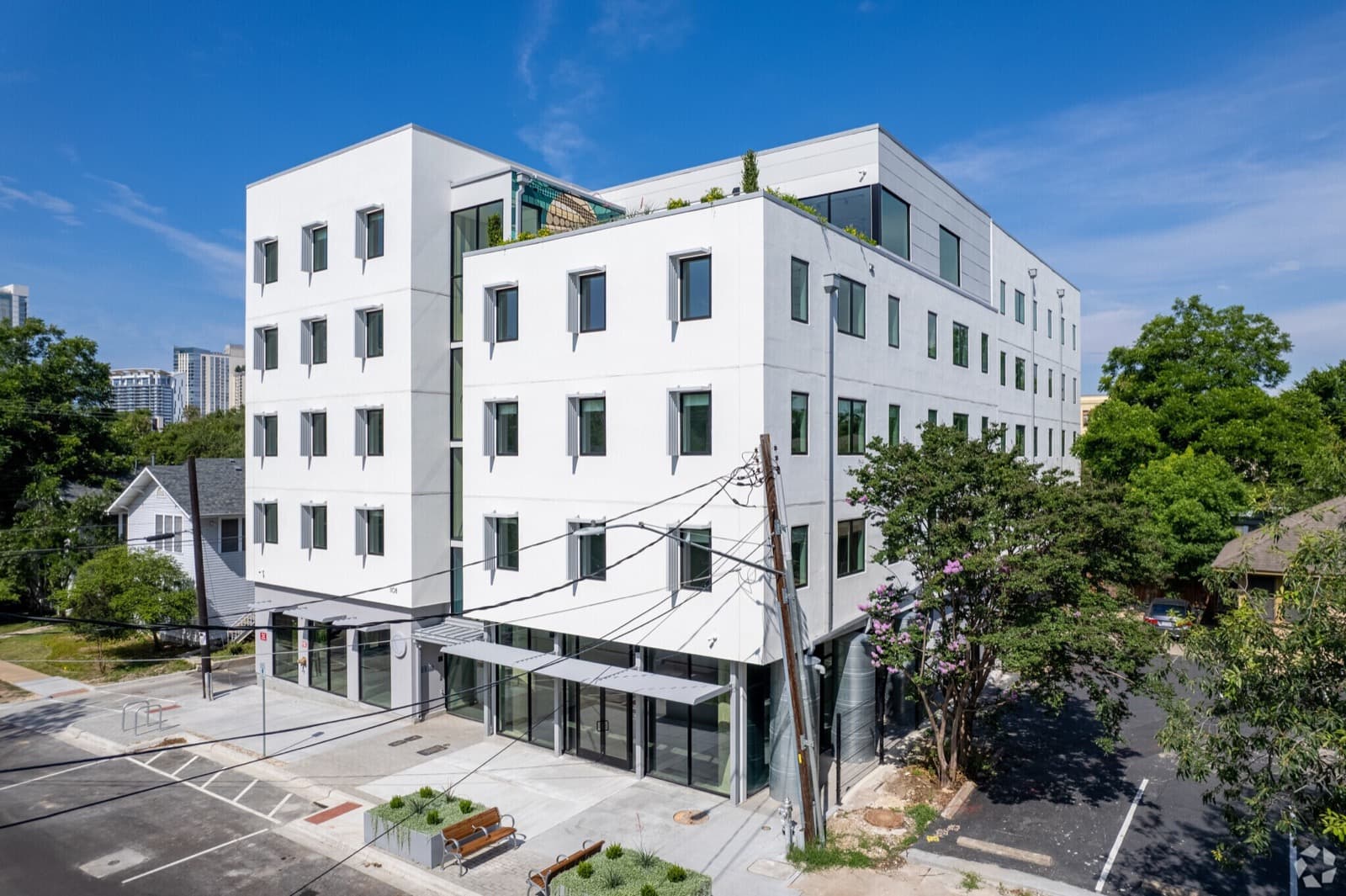
Downtown Austin — specifically the Capitol District, where Capitol Living sits at 1108 Nueces St — solves for the opposite priority: minimizing how much time you spend getting places. The Texas State Capitol is two blocks away. UT Austin's campus is 0.8 miles. Dell Medical School is 0.6 miles. The neighborhood carries a 96 Walk Score, a 91 Bike Score, and a 72 Transit Score, which in practice means most daily errands, campus trips, and downtown destinations are reachable on foot or by bike without needing to plan around a car.
What you give up is Hyde Park's residential quiet. Downtown is a working, walkable core — busier sidewalks, more activity at street level, a denser mix of uses. It's not chaotic, but it's unmistakably a city center rather than a tucked-away neighborhood.
Distance to UT Austin, Side by Side
If proximity to UT Austin's campus is the deciding factor, the two neighborhoods land differently depending on which part of campus matters to you. Hyde Park sits closer to UT's north side and the neighborhoods that border it there, with a straightforward but car-dependent or bus-dependent trip to central campus. Downtown's Capitol District is 0.8 miles from UT Austin overall, and because the walk runs through a dense, walkable core rather than a purely residential stretch, it tends to feel more direct day to day — no waiting on a bus schedule, no parking search. For anyone who also has business at the Capitol or Dell Medical School, downtown closes that gap further; Hyde Park does not offer the same proximity to either.
Which Neighborhood Fits Which Need
Hyde Park tends to fit people who want their home life to feel separate from campus and city energy — a quieter street, more residential texture, a slower evening. It works well if you don't mind a planned commute and you're prioritizing neighborhood character over minute-by-minute access.
Downtown's Capitol District tends to fit people who want to minimize commute time entirely and would rather trade some residential quiet for walk-everywhere convenience — to campus, to the Capitol, to Dell Medical School, and to downtown Austin's day-to-day errands and food options. If your week involves multiple destinations spread across campus, downtown, and the medical district, the walkability compounds in a way a single-neighborhood commute from Hyde Park doesn't replicate.
Seeing the Access Difference in Person
Neighborhood comparisons only go so far on paper — walk scores and mile markers describe a route, not how it actually feels to cover it every day. The clearest way to judge the difference is to walk both areas at the times you'd actually be moving through them: morning commute hours, evening return, a weekend errand run. Downtown's Capitol District access, in particular, is easiest to evaluate from a unit that's actually inside it rather than adjacent to it.
Frequently Asked Questions
Is Hyde Park within walking distance of UT Austin?
Parts of Hyde Park are walkable to UT Austin's north side, but the distance and route vary depending on where in the neighborhood you're located, and many residents rely on a bus or bike for a consistent daily commute.
How far is Downtown Austin's Capitol District from UT Austin?
The Capitol District is about 0.8 miles from UT Austin's campus, with a 96 Walk Score and 91 Bike Score making the trip manageable on foot or by bike most days.
Which neighborhood is quieter, Hyde Park or Downtown Austin?
Hyde Park is the quieter, more residential option, with tree-lined streets and a slower pace. Downtown Austin is a denser, more active city core with more foot traffic and activity at street level.
Is Downtown Austin close to the Texas State Capitol and Dell Medical School?
Yes. The Capitol District sits two blocks from the Texas State Capitol and 0.6 miles from Dell Medical School, both of which are meaningfully closer from downtown than from Hyde Park.