The Case For: Cost Structure
One of the clearest financial arguments for a shared apartment is the lease structure itself. Instead of four people each signing separate one-bedroom leases scattered across different buildings — each with its own deposit, application fee, and utility setup — a shared 4-bedroom apartment is held under a single whole-unit lease that the group carries together. The building bills one lease, one rent total, one utility bundle; the residents living there arrange how that total gets split between themselves. That's a fundamentally different financial exposure than four independent leases, and it's part of why shared apartments remain a common choice for renters trying to access a walkable, higher-quality address without shouldering the entire cost of a unit alone.
The Case For: Space You Wouldn't Get Alone
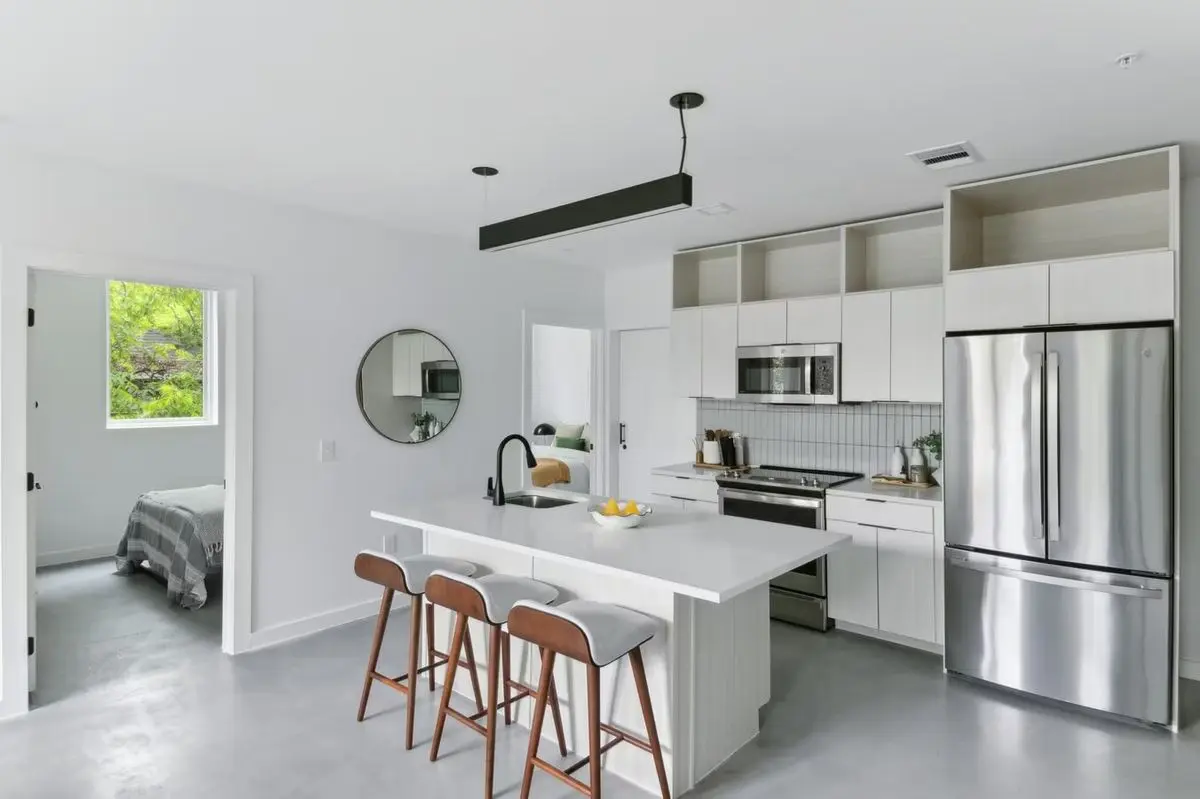
A shared 4-bedroom layout also unlocks square footage and amenities that a solo renter typically can't justify on one income. At roughly 1,000 square feet, a unit like The Capitol Living's includes an open-concept kitchen with a quartz island and bar seating, a versatile sunroom that can flex as a living area or workspace, and two full bathrooms serving the four bedrooms — a meaningfully better ratio than the single shared bath common in many older shared houses. Add building-level amenities like an on-site fitness center and a designer lobby, and residents get access to spaces that would be difficult to justify, or afford, in a solo studio at the same downtown address. See how that compares to a solo studio, side by side.
The Case For: A Built-In Social Base
Moving into a new city, or even just a new part of town, can be isolating when you're doing it entirely alone. A shared apartment creates natural, low-effort daily contact — someone in the kitchen in the morning, someone around in the evening — without requiring any extra effort to build a social routine from scratch. That's not a guarantee of friendship, and it's not a substitute for finding your own community in a new city, but it does remove the complete blank slate that comes with living entirely solo in an unfamiliar downtown.
The Real Cons: Shared Bathrooms and Common Space
None of this comes without friction. Even with two full bathrooms for four bedrooms — a better ratio than many shared setups — mornings can still require some coordination, especially if schedules cluster. The kitchen, the sunroom, and any other common space are, by definition, shared: that means negotiating cleanliness standards, noise levels, guests, and general etiquette with people who aren't necessarily your closest friends. A shared apartment only works well when everyone living there is reasonably aligned on how a shared space gets treated, and that alignment isn't automatic just because the lease says so.
The Real Cons: Group Decision-Making
Living with roommates also means decisions stop being unilateral. A maintenance request, a disagreement about a shared bill, or a decision around renewing the lease now involves more than one voice, and not everyone will always agree. If someone moves out mid-lease, the remaining residents are left navigating that transition — finding a replacement, covering the gap, or renegotiating how the apartment's cost gets split — without the building acting as a matchmaker in that process. It's a real tradeoff against the total autonomy of living alone, and it's worth going in with eyes open about it.
What Makes a Shared Layout Work
The apartments that make shared living work well tend to share a few structural traits: enough genuinely private bedrooms that everyone gets real privacy, enough bathrooms that mornings don't become a bottleneck, and enough common space that four people aren't crowding into one small kitchen. A 4-bedroom, two-bath layout with a dedicated sunroom and a full-size kitchen island checks those boxes in a way a converted 2-bedroom split four ways typically doesn't. The lease structure matters too — one unified lease the group holds together is simpler to manage than four mismatched sub-leases layered on top of each other.
Frequently Asked Questions
Is it cheaper to live with roommates in downtown Austin?
A shared whole-unit lease spreads one apartment's total cost across multiple residents rather than one renter carrying an entire unit's rent alone. How that total is divided is arranged by the residents themselves — The Capitol Living does not set or advertise a per-person rate.
How many bathrooms does a shared 4-bedroom apartment need?
Two full bathrooms for four bedrooms is generally considered a workable ratio, reducing the morning bottleneck common in shared apartments with only one bathroom.
What are the biggest downsides of living with roommates?
The most common friction points are shared bathroom and kitchen scheduling, differing cleanliness standards, and group decision-making around maintenance, bills, and lease renewal.
Does The Capitol Living help match roommates?
The Capitol Living leases the apartment as a whole unit to a single group. The building does not provide roommate-matching — residents arrange who they're leasing with independently.