Two Different Bets on Where You Live in Austin
Riverside and downtown Austin are answering two different questions. Riverside asks: what's the lowest number that shows up on a lease? Downtown, and the Capitol District specifically, asks a different question entirely: what does that number actually buy once you account for getting anywhere from it? Neither answer is wrong on its own. The mistake most apartment hunters make is comparing the two neighborhoods on advertised rent alone, as if the commute that comes with the cheaper address is somehow free. It isn't, and the difference shows up in time, transit cost, and how much of a weekday actually belongs to you.
This isn't a case for one neighborhood being universally better. It's a case for running the full math before signing anything, because the number on the listing is only half the picture.
Riverside: Lower Advertised Rent, Garden-Style Stock
South of Lady Bird Lake, Riverside genuinely wins on sticker price. The area is dominated by older garden-style apartment stock, and that inventory type tends to list lower than newer buildings closer to the urban core. If your only filter is the monthly number at the top of a listing, Riverside will usually clear that bar first. It's also a real neighborhood with its own rhythm — not a compromise zip code, just a different one.
What Riverside doesn't offer as reliably is a walkable path to the Capitol, campus, or the medical district. Most trips from Riverside to those destinations run through a bus transfer, a longer bike ride along shared corridors, or a car — and Austin traffic doesn't discount for good intentions.
Downtown Austin: Walkability by the Numbers
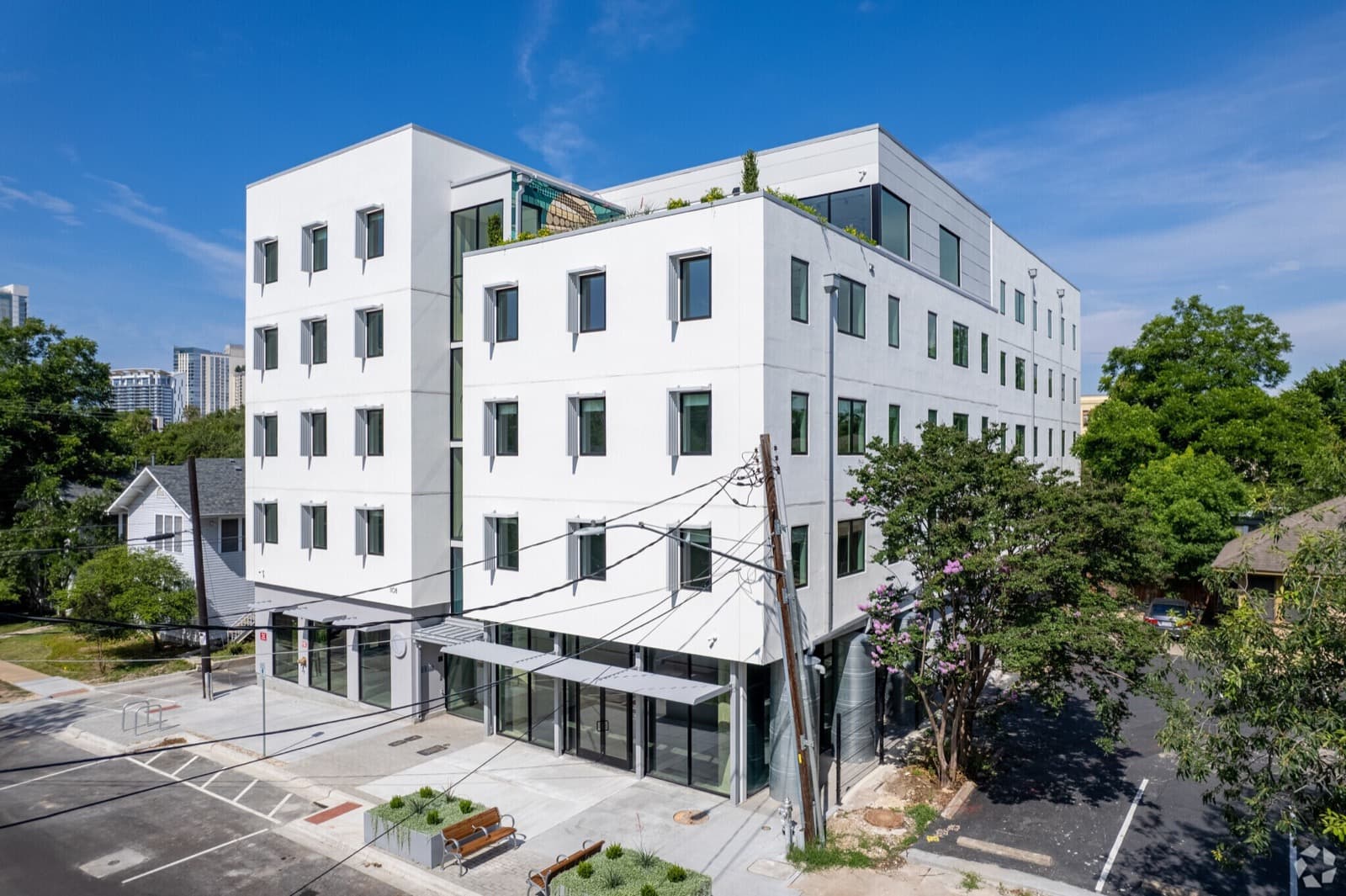
The Capitol District trades a higher advertised rent for a measurably shorter distance to almost everything. Capitol Living sits two blocks from the Texas State Capitol, roughly 0.8 miles from the University of Texas at Austin, and about 0.6 miles from the Dell Medical School campus. Walk Score rates the address 96, Bike Score 91, and Transit Score 72 — numbers that describe an area where a car is optional rather than required for daily errands.
For context, downtown Austin studios average about $1,950/month (RentCafe, RentHop, June 2026), which puts a rough floor on what proximity to the core costs across the market generally — not specific to any one building or unit type. The point isn't that downtown is cheap. It's that the premium buys back something concrete: distance you don't have to cover twice a day.
The Commute Cost Nobody Puts on the Listing
A lower rent in Riverside doesn't erase the cost of the trip downtown — it just moves that cost off the lease and onto your calendar and your wallet. Gas, a bus pass, parking near campus or the medical district, and the wear on a vehicle used daily all add up month over month, and none of it appears on the original listing price. Neither does the time. Thirty extra minutes each way, five days a week, adds up to hours that don't come back.
If you're weighing a shorter lease term against that kind of daily trade-off, it's worth reading how the math changes for shorter stays in our guide to short lease options versus extended-stay hotels in Austin — the commute-cost logic runs the same either way.
Matching the Neighborhood to the Need
If your daily destinations are spread across the metro and you're comfortable driving, Riverside's lower advertised rent is a legitimate win — you're not paying for proximity you won't use. If your daily destinations cluster around the Capitol, campus, or the medical district, the math tends to favor downtown once commute time and transit cost are added back in.
If you're weighing whether a lease with roommates changes that calculation, our guide on splitting rent and bills fairly among roommates walks through how shared households handle uneven costs. And if part of your decision is about trust and lease structure rather than just location, see our comparison of managed shared homes versus informal sublets. For walkable options built specifically around this stretch of downtown, you can also explore apartments near UT Austin.
Frequently Asked Questions
Is Riverside actually cheaper than downtown Austin?
On advertised rent alone, Riverside's garden-style apartment stock typically lists lower than buildings closer to the downtown core. That gap narrows or disappears once commute costs — gas, transit, parking, and time — are factored back in for trips downtown.
How far is downtown Austin from UT Austin and the Capitol?
From the Capitol District, the Texas State Capitol is about two blocks away, UT Austin is roughly 0.8 miles, and the Dell Medical School campus is about 0.6 miles. The area carries a Walk Score of 96, Bike Score of 91, and Transit Score of 72.
What's the real trade-off between Riverside and downtown?
Riverside trades a lower advertised rent for a longer, less predictable commute to the Capitol, campus, and the medical district. Downtown trades a higher advertised rent for walkable or short-bike access to those same destinations.
Which area is better without a car?
Downtown Austin's Capitol District is built for car-optional living, with a Walk Score of 96 and Transit Score of 72. Riverside is more workable with a car or regular transit use, since most core-Austin destinations require a longer trip.