Two Very Different Neighborhoods, One Shared Border
West Campus and Downtown Austin sit next to each other on a map, but they don't feel alike once you're actually living in either one. West Campus is a dense, low-rise district built almost entirely around university foot traffic — its whole rhythm is set by lecture schedules, late-night study spots, and a five-to-ten-minute walk radius to campus buildings. Downtown Austin is a different kind of density: high-rises and mid-rises mixed with the Texas Capitol grounds, state office buildings, restaurants, and a business district that runs on its own clock, seven days a week.
The distance between the two is short — under a mile in most cases — but the daily experience of living in one versus the other is not interchangeable. This comparison looks at the trade-offs as they actually play out: walk distance, density and building stock, noise and pace, dining and amenities, and transit and bike access.
Walk Distance: Campus-Only vs Campus-Plus-Everything
West Campus wins the single metric of shortest walk to a lecture hall. Most West Campus buildings put you within a five- to fifteen-minute walk of the UT Austin core, and that proximity is the neighborhood's entire reason for existing.
Downtown Austin trades a slightly longer walk to campus — generally in the 15-20 minute range depending on the building and the specific UT destination — for a walk radius that covers a lot more ground. From a Downtown address, the Texas State Capitol is typically two to three blocks away, Dell Medical School is under a mile, and the core of Austin's restaurant, nightlife, and business district is immediately outside your door. Capitol Living, for example, sits two blocks from the Capitol, 0.8 miles from UT Austin, and 0.6 miles from Dell Medical School — a single walkable radius that reaches campus, state government, and the medical district at once, without requiring a car or a long transit ride between any of them.
The question isn't which walk is shorter in isolation — it's whether your daily life only needs campus, or needs campus and a wider set of destinations.
Density and Building Stock
West Campus has undergone significant redevelopment over the past decade, replacing older low-rise housing with taller, purpose-built residential towers. Building quality varies widely by construction era — some properties are new and amenity-rich, others are older stock with fewer updates.
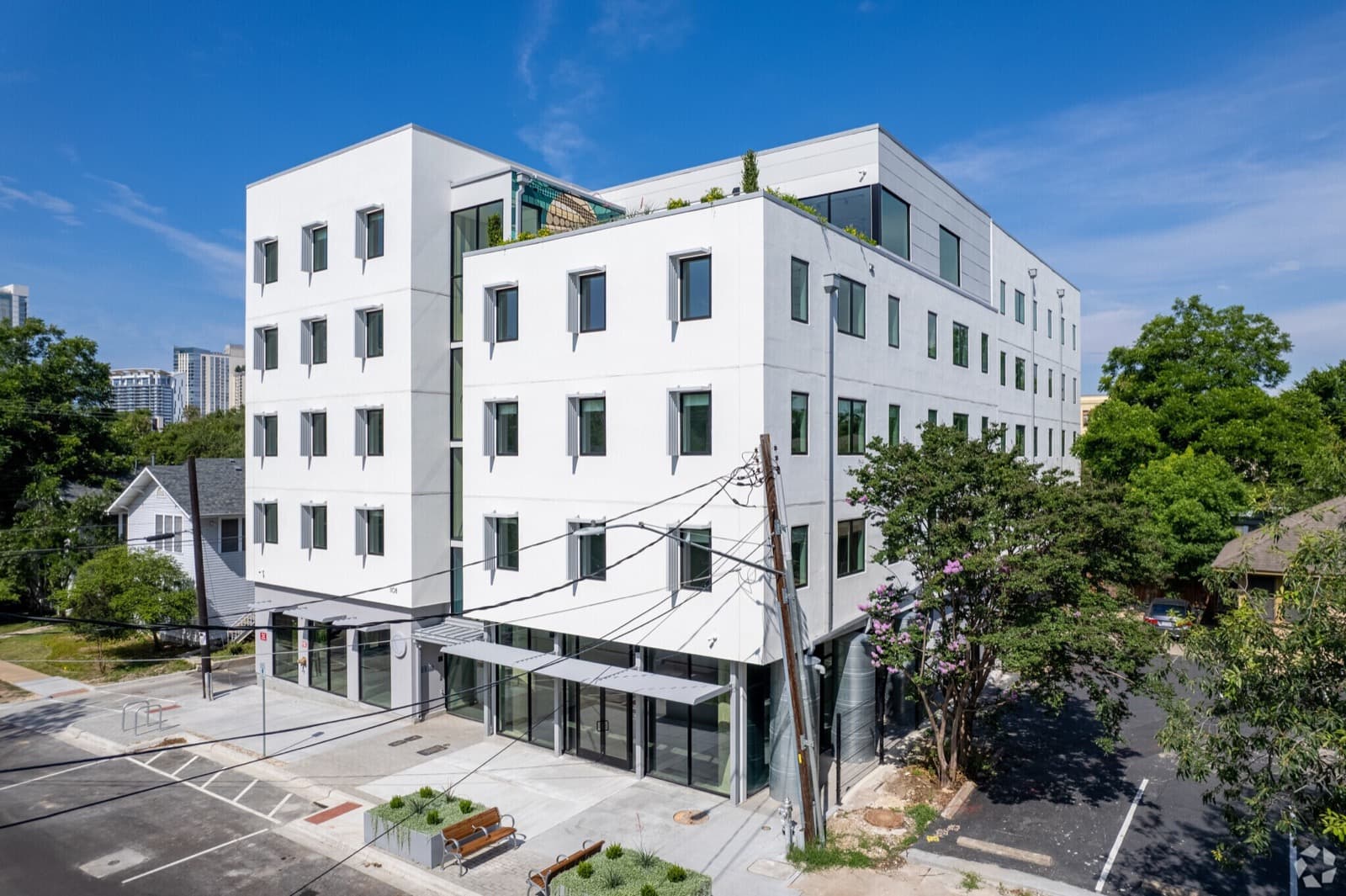
Downtown Austin's residential building stock skews toward newer construction and mixed-use high-rises, often built alongside or above office, retail, and hospitality space. A building like Capitol Living reflects this pattern directly: a 2022-built, five-story property with 30 units plus a penthouse, quartz-and-stainless interior finishes, and building-wide amenities like an on-site fitness center and designer lobby — built for downtown's mixed residential-commercial context rather than a single-institution one.
Noise, Pace, and Weekly Rhythm
West Campus runs on an academic calendar. Its noise pattern, foot traffic, and general energy rise and fall with the university calendar — busy during the school year, noticeably quieter over breaks and summer sessions. Weekend nights can be loud, concentrated around the density of nearby bars and high-turnover residential blocks.
Downtown Austin's pace is set by a broader mix: office workers on weekdays, government activity around the Capitol, restaurant and entertainment traffic in the evenings, and a steadier year-round rhythm that doesn't collapse over academic breaks. It's not necessarily quieter — Downtown has its own event calendar, live music, and weekend crowds — but the source of that activity is more varied and less tied to a single institution's schedule.
Dining, Amenities, and Daily Errands
West Campus dining leans toward fast-casual spots, coffee shops, and late-night options built for quick, budget-friendly meals and late-night hours. It's efficient and walkable, but the selection is narrower and more repetitive over time.
Downtown Austin has a much broader dining and retail base — it's the commercial center of the city, with a wider range of price points, cuisines, and hours, plus proximity to the Capitol complex's office-worker lunch crowd and the entertainment district's evening traffic. For day-to-day variety, Downtown offers more without requiring a drive.
Transit and Bike Access
Both neighborhoods score well for walkability and bikeability by national standards, but Downtown's transit connections extend further. A location like Capitol Living posts a Walk Score of 96, a Bike Score of 91, and a Transit Score of 72 — numbers that reflect not just proximity to campus but access to Austin's broader bus network, which connects Downtown to UT Austin, the medical district, and employment centers across the city. West Campus is highly walkable within its own footprint, but its transit connections outward are generally less central than Downtown's.
So Which One Is Right?
If your entire routine begins and ends on campus, West Campus keeps that specific walk as short as it gets. But if your life needs to reach beyond the university — the Capitol, Dell Medical School, downtown employers, a wider restaurant scene, or a transit network that goes further than a few blocks — a Downtown location covers more of that ground from a single address.
Capitol Living sits inside that second category: a five-story, 30-unit building two blocks from the Capitol, under a mile from UT Austin, and under a mile from Dell Medical School, with four-bedroom, two-bath layouts built around a single whole-unit lease.
Frequently Asked Questions
Is West Campus or Downtown Austin closer to UT Austin?
West Campus is closer to the core UT Austin campus, typically a 5-15 minute walk. Downtown Austin locations are generally a 15-20 minute walk to campus, but sit within reach of a wider set of destinations, including the Texas Capitol and Dell Medical School.
Does Downtown Austin have good transit access to UT Austin?
Yes. Downtown Austin connects to UT Austin and surrounding areas via Austin's bus network. A location with a Transit Score of 72, for example, reflects strong access to routes covering campus, the medical district, and employment centers.
Is Downtown Austin quieter than West Campus?
Not necessarily quieter, but different. West Campus noise and activity follow the academic calendar, peaking during the school year and dropping over breaks. Downtown's pace is set by a broader mix of office workers, government activity, and evening entertainment traffic, so it runs on a steadier year-round rhythm.
What kind of housing is available in each neighborhood?
West Campus building stock ranges from older low-rise housing to newer purpose-built towers. Downtown Austin skews toward newer, mixed-use construction — buildings that combine residential units with retail, office, or hospitality space, often with more current interior finishes and amenities.
Reach Campus, the Capitol, and Downtown in One Walk
Looking for a base that reaches campus, the Capitol, and downtown Austin in one walk? Explore four-bedroom apartments near UT Austin at Capitol Living.
See 4-Bedroom Apartments Near UT Austin