What "Capitol-Adjacent" and "Core" Actually Mean
Search for a downtown Austin apartment and two phrases show up constantly: "downtown core" and "near the Capitol." They sound like opposite choices. In practice they are two ends of a measurable scale, and the useful question is not which label you prefer. It is how many blocks you want between your door and the things you actually visit. This post gives you a way to answer that with distances instead of adjectives. The downtown Austin apartments guide introduces the sub-districts at a high level, and this is the closer look at one distinction inside it.
Nobody publishes an official boundary for either term, so treat them as shorthand. Capitol-adjacent means the blocks near the Texas State Capitol grounds. The downtown core, as people use the phrase, means the denser blocks toward the entertainment and dining corridor. Because the boundaries are informal, two listings can use the same word for addresses that sit several blocks apart. That is why a distance in blocks or miles is more reliable than a district name.
Walkability is a separate topic with its own write-up, so this post does not explain the scores. Here the focus is on the layout of the destinations themselves.
The Two Endpoints, in Blocks
For this comparison only two published distances carry the argument. From 1108 Nueces St, the Texas State Capitol is two blocks away (0.2 miles, a 3-minute walk), and the 6th Street entertainment district is three blocks away. Those are the two ends of the scale below. The full list of distances from the building, including the campus and medical destinations, is in the Capitol District walkability post.
Read the two numbers together. The Capitol is two blocks one way and 6th Street is three blocks another way, so a single address can sit comfortably inside both ideas. The sharp distinction in the search results often disappears once you measure from a real front door.
Core Versus Capitol-Adjacent Is a Gradient
Picture a line with the Capitol grounds at one end and the entertainment corridor at the other. Every downtown address sits somewhere along it, and moving along the line changes what is closest to you without changing what is reachable. Everything in the list above is still a short walk. What shifts is the order in which you pass things and which destination is the nearest one.
That is a more honest frame than picking a side. Moving toward the Capitol shortens the walk to the Capitol grounds and the government buildings around them. Moving toward the entertainment corridor shortens the walk to restaurants, bars, and venues. Neither move removes the other from your day, it only changes the distance.
Three Trade-Offs Worth Weighing
Your Shortest Daily Walk
List the five places you expect to go most often, then note which one is nearest at each address you are considering. If the nearest is a government building or a campus, you are leaning Capitol-adjacent. If the nearest is a restaurant row or a venue, you are leaning core. Both are valid. The point is to see which direction your routine actually pulls, rather than assuming it from a map label.
The Entertainment Corridor Is a Variable, Not a Verdict
Being three blocks from 6th Street puts the corridor within a short walk, which cuts both ways. It means easy access to the venues. It also means that at some windows, the sound categories in the downtown noise guide may be worth checking, since event venues and nightlife corridors are two of its six groups. Whether any of them reach a specific window depends on the block, which is why that guide recommends testing at several hours rather than trusting a label.
The Fixed Points You Actually Use
The Capitol, Austin Community College, the medical campus, the university, and the lake trail are all fixed points that do not move. Whichever of them you visit regularly, measure the walk to it from each candidate address, because the same destination can be a short walk from one address and a longer one from another. The Dell Medical District guide covers the medical edge of downtown in more detail.
How to Compare Two Addresses Yourself
- Write down your destinations. Five is plenty. Include the ones you visit weekly, not the ones you visit once.
- Measure from the front door. Use a map app's walking mode at each address and record minutes, not impressions.
- Note what you pass. The route matters as much as the total. A short walk along a busy street feels different from a short walk along a side street.
- Visit at two different hours. Weekday morning and a weekend evening are enough to show how a block changes.
- Repeat the exercise for each address. Put the numbers in one table so the comparison is visible.
This exercise replaces a label with data. Two addresses that both call themselves downtown can produce very different tables, and the table is what you will live with.
Where Capitol Living Sits on the Scale
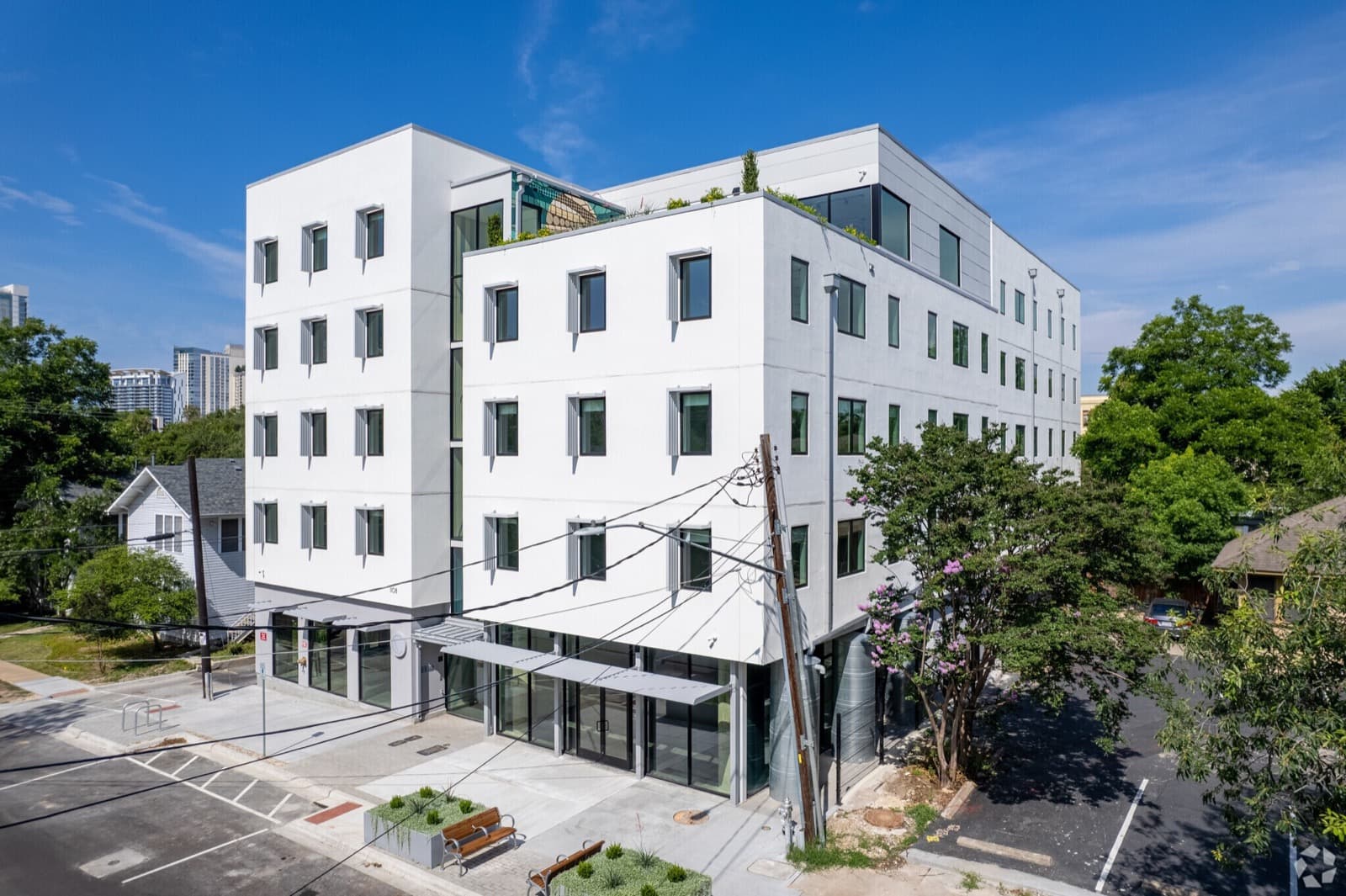
At 1108 Nueces St, the Capitol is a 3-minute walk and 6th Street is three blocks, with the campus and medical destinations a bit farther out. In other words, the building has short walks in more than one direction, which is what makes the core-versus-adjacent label a poor fit for it.
The building itself is a five-story multifamily property with a gated entry, an elevator, and bike storage. Each of its 30 residential units is a 4-bedroom apartment leased as a whole unit, with a 3-month minimum term. Rent includes internet, WiFi, gas, water, and wastewater, and electricity is served separately by Austin Energy. The apartments near UT Austin page covers the campus side of the distance list if that is the direction you care about most.
What the Scale Does Not Tell You
Distance is only one input. It does not describe lease structure, what rent covers, or how a floor plan works, and those factors belong to the building rather than the district. Two buildings on the same block can differ on all three. So use the distance table to narrow the field, then compare the buildings that remain on the terms that decide your costs and your daily routine. A short walk to everything is worth little if the lease structure does not match what you need.
Questions to Bring to a Tour
Standing at the address answers more than any article can. Ask the leasing team what the street outside a given unit looks like at different hours. If you would rather start with a message, the leasing team's contact page is the quickest route. Then walk your own five destinations from the door. If you want to see the area first, the downtown Austin neighborhood guide names what sits within walking range.
When you are ready to see how the distances feel on foot, schedule a tour of Capitol Living and walk your own route from the front door.
Frequently Asked Questions
Is there an official boundary between the downtown core and the Capitol area?
No. Neither term has an official boundary, so listings use them loosely. A distance in blocks or miles from a specific address is more reliable than a district label, and it is easy to measure with any map app in walking mode.
How far is Capitol Living from the Texas State Capitol and from 6th Street?
Capitol Living is two blocks from the Texas State Capitol, 0.2 miles or about a 3-minute walk, and three blocks from the 6th Street entertainment district. Austin Community College is one block away.
How do I compare a core address with a Capitol-adjacent one?
List the five places you visit most, then measure the walking time from each candidate front door to each place and record the numbers in one table. Visit each block at two different hours so the comparison includes how the street changes during the day.
Does living closer to 6th Street change what rent includes?
No. What rent includes depends on the building, not the district. At Capitol Living, rent includes internet, WiFi, gas, water, and wastewater, while electricity is served separately by Austin Energy.