The Real Question Is Quiet or Central
Most comparisons between North Campus and Downtown Austin get framed as a price question. That framing hides the decision you are actually making. These two areas sit close enough on a map that the rent gap between them narrows once you price out everything a lease does not include, and far enough apart in daily character that they produce genuinely different weeks. North Campus is residential. Downtown is central. Those are not marketing adjectives, they are structural facts about how each area was built and who moves through it at 8am on a Tuesday.
So the useful question is not which one is cheaper. It is which trade you would rather make: a calmer street with more distance between you and everything, or a denser address with everything inside a short walk and the activity that comes with it. Both answers are defensible. Signing the wrong one for twelve months is the expensive mistake, not paying a bit more for the right one. Here is what actually separates them.
North Campus: A Residential Pace
North Campus reads as a neighborhood before it reads as a destination. The building stock skews toward low-rise housing and converted homes, the streets are narrower, and the blocks have front yards and trees rather than ground-floor retail. That produces a noticeably quieter baseline than anywhere closer in. If your idea of a good apartment includes hearing birds instead of buses, North Campus delivers that in a way downtown structurally cannot.
The area's rhythm follows the academic calendar. Foot traffic and street noise swell when the university is in session and thin out over breaks, which means the area you tour in July is not quite the area you live in come October. That seasonality cuts both ways. It gives you genuinely calm stretches, and it means your quietest tour may be your least representative one.
The trade shows up in distance. North Campus sits farther from downtown employment, the Texas State Capitol, and the Dell Medical School area than an address closer to the core. That distance is usually absorbed by a car, a bike, or a bus route, and each of those carries a cost in money, time, or both that never appears on the lease.
Downtown and the Capitol District: Central by Design
Downtown Austin was not built to be quiet. It was built so that a large number of destinations sit within a small radius, and it succeeds at that. The Capitol Living, at 1108 Nueces St, carries a Walk Score of 96, a Bike Score of 91, and a Transit Score of 72. It sits 2 blocks from the Texas State Capitol, 0.8 miles from UT Austin, and 0.6 miles from Dell Medical School. Those are not aspirational numbers, they are the reason a car becomes optional here rather than assumed.
What that buys you is a week with less logistics in it. Groceries, work, transit, the Capitol grounds, and campus are all reachable without planning a trip around parking. What it costs you is a constant baseline of activity: delivery trucks, evening traffic, and the ordinary noise of a dense district that never fully empties, because downtown's population is not tied to any single calendar. Its pace is steadier year round than North Campus, which cuts both ways again. There is no quiet season, but there is also no surge season.
Noise Is Not the Same Thing in Both Places
Renters often say they want quiet without specifying which kind, and the two areas fail that request very differently. North Campus noise is episodic and social. It is concentrated on certain streets, it rises and falls with the calendar, and it arrives from neighbors rather than infrastructure. Downtown noise is ambient and mechanical. It is more constant, less personal, and largely produced by vehicles and commerce rather than the unit next door.
Which one bothers you is a real preference, not a tiebreaker. Ambient traffic hum fades into the background for a lot of people within a week. Unpredictable late activity on a residential street tends not to, because the brain treats irregular sound as something to track. If you are a light sleeper, the honest test is not which neighborhood is quieter on average. It is which type of sound you personally stop noticing.
Interior construction matters more than either. Solid-core wood doors on the bedrooms, a five-story build, and where your unit sits within the building will shape your nights more than the neighborhood label on the listing.
Getting Around Without Guessing
This is where the two areas separate most cleanly, and where the comparison stops being subjective. From a downtown address with a Walk Score of 96, a Bike Score of 91, and a Transit Score of 72, most daily trips can be made on foot, and the ones that cannot are covered by bike or bus. That is a car-optional setup, and going car-optional removes insurance, fuel, and parking from your monthly outflow entirely.
From North Campus, the same set of trips generally requires a vehicle, a bike for the longer stretches, or a bus schedule you plan around. None of that is a flaw. Plenty of renters already own a car, already have parking, and would rather have the quiet street. For them, North Campus costs nothing extra in transportation and delivers the calmer baseline they actually want.
The mistake is assuming the transportation line is zero when it is not. If you are comparing North Campus rent to a downtown address and you would need to buy or keep a car to make North Campus work, that car belongs in the comparison. We break that math out in more detail in our cost of living near UT Austin comparison.
What Each Area Asks You to Give Up
North Campus asks you to give up immediacy. Everything is reachable, but almost nothing is reachable in five minutes on foot. You trade spontaneity for space and calm. Errands become trips. That suits people whose week is planned anyway, and frustrates people whose week is not.
Downtown asks you to give up the residential hush. You get a district that is awake around you, ground-floor activity, and the noise floor that comes with density. You trade quiet for the removal of logistics from your day. That suits people who value their time more than their silence, and frustrates people who want their street to feel like a neighborhood rather than a place other people commute to.
Neither trade is universally better. What makes it a real decision is that you cannot buy your way out of either one. A quieter downtown address is still downtown. A more central North Campus address is still not two blocks from the Capitol. The geography is the product.
Matching the Area to the Lease You Actually Want
One more variable belongs in this comparison, because it changes what each area can offer you: lease structure. North Campus building stock is dominated by smaller units on conventional twelve-month terms. Downtown includes contemporary buildings with different layouts and different terms.
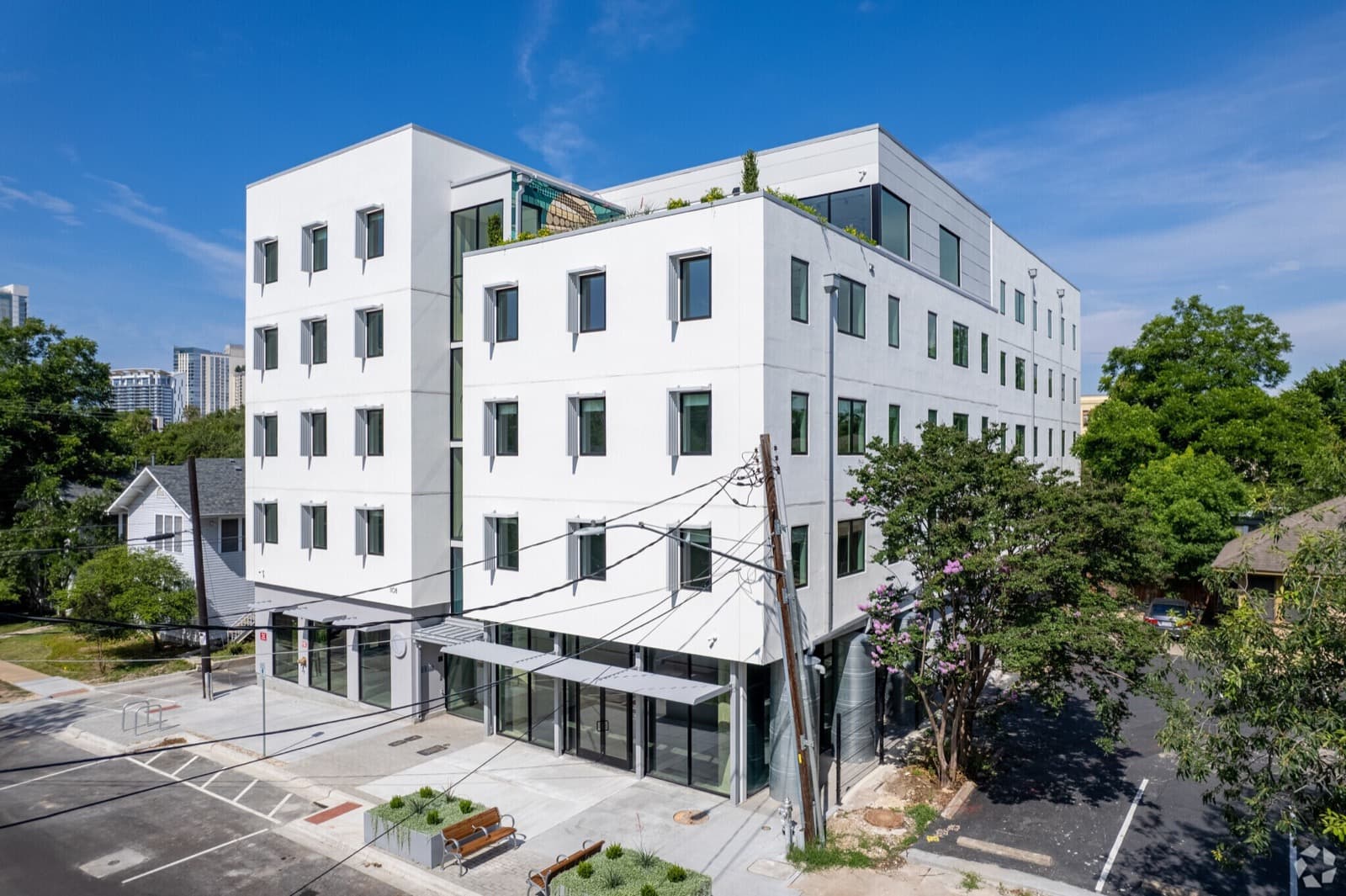
The Capitol Living is a 2022-built, five-story multifamily building with 30 units plus a penthouse. Each apartment is roughly 1,000 square feet with 4 bedrooms, a versatile sunroom, and 2 full baths, leased as a whole unit on a 3-month minimum rather than the standard twelve. Rent includes internet, WiFi, gas, water, and wastewater, with electricity billed separately. The building has an on-site fitness center. That is a structurally different offer than a small unit on a year-long term, and it is only available because of where the building sits.
If the deciding factor is a calm residential street and you already have a car, North Campus is a straightforward answer. If it is access, a shorter minimum term, and taking the car out of the equation, the Capitol District answers a question North Campus cannot. Compare it against the closer-in option in our West Campus vs Downtown guide before you decide.
Frequently Asked Questions
Is North Campus quieter than Downtown Austin?
On average, yes. North Campus is residential, with lower-rise building stock and less through traffic, so its baseline noise is lower. But the noise is different in kind: North Campus activity is episodic and follows the academic calendar, while downtown's is steadier ambient traffic and commerce year round. Which one you notice more is a personal preference.
How far is Downtown Austin from UT Austin compared to North Campus?
North Campus sits nearer the northern edge of the UT Austin campus. A downtown address like The Capitol Living at 1108 Nueces St is 0.8 miles from UT Austin, 2 blocks from the Texas State Capitol, and 0.6 miles from Dell Medical School, with a Walk Score of 96, a Bike Score of 91, and a Transit Score of 72.
Do I need a car in North Campus or Downtown Austin?
Downtown's Walk Score of 96 and Transit Score of 72 make a car optional for most daily trips. North Campus sits farther from downtown destinations, so many renters there rely on a car, a bike, or a bus route. If you would need to buy or keep a car for one option and not the other, that cost belongs in the comparison.
What kind of apartments are available downtown versus North Campus?
North Campus skews toward smaller units in lower-rise buildings on conventional 12-month terms. Downtown includes contemporary buildings. The Capitol Living, built in 2022, offers roughly 1,000-square-foot apartments with 4 bedrooms, a sunroom, and 2 full baths, leased as a whole unit on a 3-month minimum.