Near UT Austin Means Different Things in Different Directions
Searching "apartments near UT Austin" turns up listings scattered across at least four distinct areas: West Campus, North Campus, Riverside, and downtown around the Texas State Capitol. Each one puts you within a reasonable radius of campus, but "near" stretches from a five-minute walk to a twenty-minute one depending on which direction you look. Before comparing rent, floor plans, or lease terms, it helps to separate these areas by what they actually deliver day to day, not just their distance to the nearest lecture hall.
This isn't a ranking of one neighborhood over another. It's a framework for matching a specific area to a specific set of daily needs, since the best neighborhood near UT Austin depends entirely on what else has to fit into your week. Rent, walkability, and neighborhood rhythm all move together, and weighing them separately tends to produce a decision you regret by the second month.
West Campus: Closest Walk, Least Reach
West Campus sits immediately adjacent to the university and is built almost entirely around that proximity. It's the shortest possible walk to lecture halls, full stop, and if minimizing that single distance is the entire priority, nothing else on this list beats it. The neighborhood is dense with purpose-built housing and organized around the academic calendar, which means it also empties out predictably during breaks.
That single-mindedness has a real cost. Once you're outside the blocks immediately surrounding the university, West Campus offers limited walkable reach toward downtown, the Capitol complex, or the medical district. For a full side-by-side comparison, see how West Campus stacks up against downtown Austin on density, dining, and daily rhythm.
North Campus: Quieter Streets, Longer Trips Elsewhere
North Campus trades some of West Campus's density for a quieter, more residential feel, still within a walkable range of the university. It works well if calm streets and slower pace matter more to you than proximity to nightlife or downtown offices, and it tends to appeal to renters who want distance from the busiest campus-adjacent blocks without giving up the walk to class entirely.
The tradeoff runs similar to West Campus in one respect: trips to the Capitol, the medical district, or downtown restaurants tend to run longer than they would from a more central address, whether you're walking, biking, or taking transit. The North Campus versus downtown comparison breaks down the commute and noise differences in more detail.
Downtown / Capitol District: A Wider Radius, One Address
The Capitol District sits at a different point on the map, but it's still genuinely close to UT Austin, and it's close to a lot more besides. Capitol Living, for example, is about 0.8 miles from UT Austin (roughly a 15-minute walk), 0.6 miles from Dell Medical School, and two blocks from the Texas State Capitol, with a Walk Score of 96, a Bike Score of 91, and a Transit Score of 72.
That combination means one address can reasonably serve campus, the Capitol complex, the medical district, and downtown restaurants and offices, rather than being optimized for only one destination. See the full apartments near UT Austin overview for the complete location breakdown, including exact distances and walk times.
What to Actually Weigh Before Choosing
Three questions tend to separate these areas better than any map. How many destinations does your week actually include: one destination, or several across town? How do you feel about a longer walk or a bike ride versus needing everything within five minutes? And does the neighborhood need to stay lively outside the academic calendar, or does that not matter to you?
A neighborhood built around one destination will outperform a broader one on that single metric every time. A neighborhood built around reach will outperform it on almost everything else. Renters comparing more than two areas at once may also find Hyde Park versus downtown Austin useful for rounding out the comparison before narrowing down to a shortlist.
A Simple Way to Score Two Finalists
Once you've narrowed your search to two or three real contenders, a rough scoring exercise can cut through the back-and-forth faster than another round of browsing listings. For each finalist, write down the walk time to your most frequent destination, the Walk Score and Bike Score, whether the neighborhood has a year-round rhythm or an academic-calendar rhythm, and the total monthly cost including rent and any commute-related expenses like a bus pass or parking.
Laid out side by side, that short list usually makes the decision more obvious than it felt during the search itself. A neighborhood that wins on rent but loses badly on commute time and transit cost often isn't actually the cheaper option once the full picture is in front of you, and the reverse is just as often true.
Lease Structure Matters as Much as Location
Neighborhood is only half the decision. How long you're committing, and whether you're renting alone or with roommates, changes which area makes the most financial sense. A shorter, defined lease term makes a higher-walkability address easier to justify, since you're not locking into a year-long tradeoff for a commute you might only need for a few months.
If your timeline is flexible or short, it's worth reviewing short-term lease options in Austin alongside any neighborhood comparison. And if you're applying with roommates, the apartments for roommates overview covers how a whole-unit lease works for a group, which changes the math on splitting the cost of a more central location.
Don't Skip the In-Person Tour
Every scoring exercise and every walk-time number is still a proxy for what it actually feels like to live somewhere. Once you have a shortlist of one or two areas, tour the specific units you're considering rather than relying on neighborhood-level comparisons alone. A unit's floor, its exact distance from the building entrance to the street, and the specific route you'd walk most often can shift the picture more than the neighborhood-level averages suggest. If you're touring as a group, divide up what each person checks so nothing gets missed during a single walkthrough.
Where Capitol Living Fits
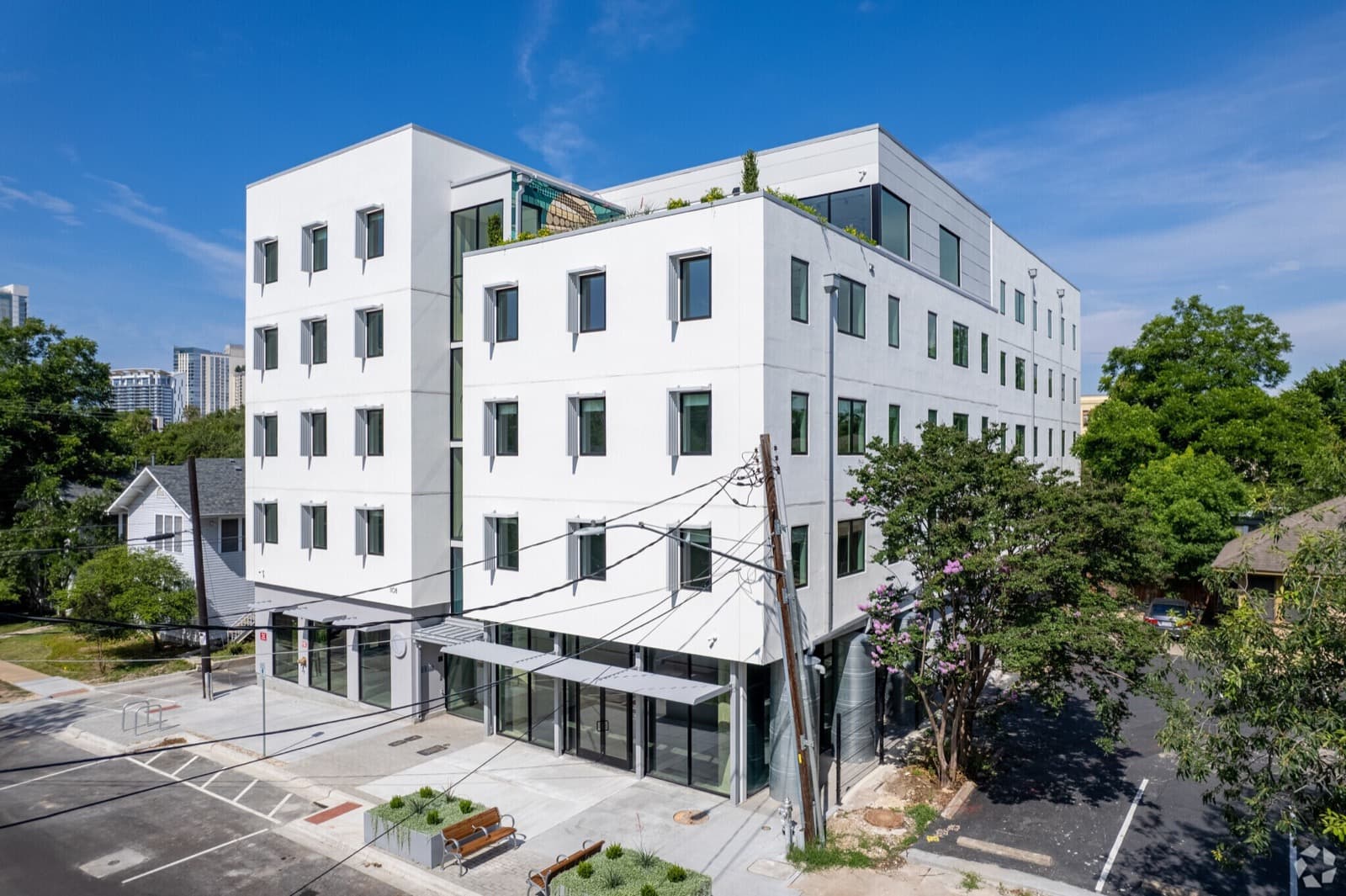
Capitol Living is a five-story multifamily building at 1108 Nueces St, two blocks from the Texas State Capitol. Each of the 30 residential units offers 4 bedrooms plus a versatile sunroom and two full bathrooms across roughly 1,000 square feet, leased as a single whole-unit lease with a 3-month minimum term, a $50 application fee, and a $50 admin fee. Rent includes internet, WiFi, gas, water, and wastewater, with electricity billed separately.
It's built for renters who want one address that reasonably reaches campus, the Capitol, the medical district, and downtown, without being locked into a single-purpose neighborhood. If a walkable, wide-reach location near UT Austin fits your list of priorities, schedule a tour of Capitol Living to see the layout and the location in person.
Frequently Asked Questions
What is the best neighborhood near UT Austin to rent in?
It depends on your priorities. West Campus offers the shortest walk to campus but limited reach beyond the university. North Campus is quieter with a similar tradeoff. Downtown, around the Texas State Capitol, offers a wider radius, reaching campus, the Capitol, the medical district, and downtown restaurants and offices from one address.
How far is Capitol Living from UT Austin?
Capitol Living is about 0.8 miles from the University of Texas at Austin, roughly a 15-minute walk, with a Walk Score of 96, a Bike Score of 91, and a Transit Score of 72.
Is downtown Austin walkable to both UT Austin and the Texas State Capitol?
Yes. Capitol Living sits two blocks from the Texas State Capitol and about 0.8 miles from UT Austin, putting both destinations within a comfortable walk or a short bike ride from the same address.
Does neighborhood choice near UT Austin affect lease length options?
It can. A more walkable, higher-reach location like downtown Austin is often easier to justify on a shorter lease term, since the location itself does more of the work regardless of how long you stay.