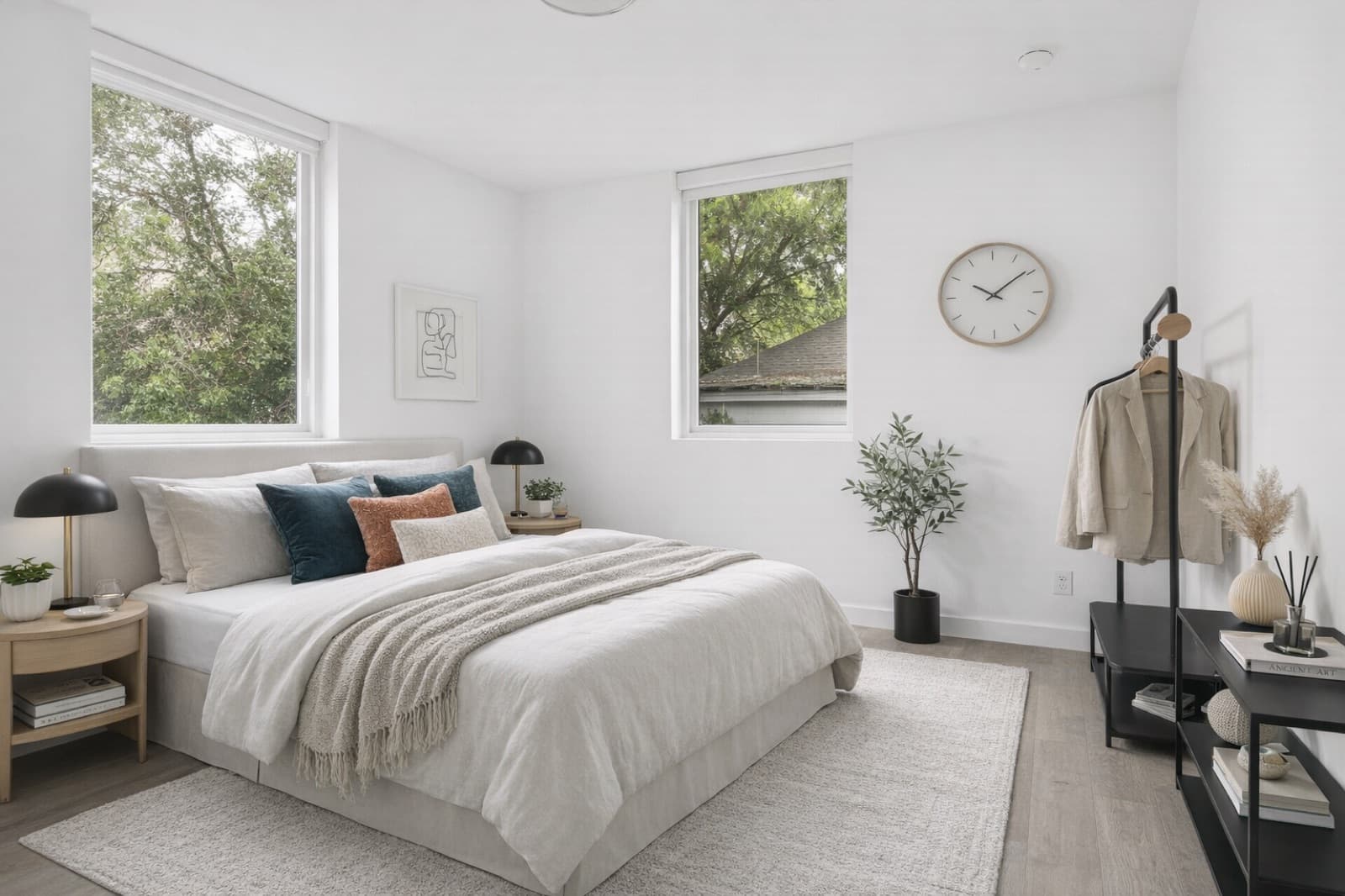
A Room That Isn't Assigned a Job
Most rooms in an apartment arrive with an obvious purpose: a kitchen cooks, a bathroom cleans up, a bedroom sleeps. A sunroom is different by design. At Capitol Living, each unit's versatile sunroom, equipped with a pull-out couch, doesn't come with a predetermined job the way the other rooms do. That's not an oversight; it's the point. A shared bonus space works precisely because the household gets to decide what it's for, rather than inheriting a use case that may not fit how four specific people actually want to live together.
This is a look at how groups tend to use a space like this in practice, drawn from common patterns rather than any single prescribed layout. The sunroom is a shared, versatile space, not a bedroom, and it isn't leased or occupied as one.
Common Use #1 — A Home Office Nobody Has to Book
One of the most common uses for a flexible bonus room is a shared workspace: a desk, a chair, and a door that closes enough to take a call without narrating it to the whole apartment. In a household where more than one person works from home some or all of the time, having a dedicated spot for that outside of a bedroom keeps work from creeping into what's supposed to be private, restful space. It also solves a scheduling problem before it starts, since a shared kitchen table gets contested fast once two people need to be on video calls at the same time.
Common Use #2 — Overflow Seating for Guests
A pull-out couch is a practical detail, not a decorative one. When a friend or family member visits for a weekend, or a roommate has someone staying over, a sunroom with a pull-out couch gives the household a real answer that doesn't involve someone giving up their own bedroom or a guest sleeping on the living room couch in the middle of everyone's daily traffic. It's a lower-commitment version of a guest room: available when needed, absorbed back into everyday use the rest of the time.
Common Use #3 — A Reading or Wind-Down Corner
Not every use is functional in the productivity sense. Some households treat the sunroom as a quiet corner, somewhere to read, unwind, or step away from a busier common area without needing to retreat all the way to a bedroom. Natural light and a slightly separate footprint from the main living and kitchen area make a sunroom well suited to this kind of low-key, unscheduled use, the kind that doesn't need a plan so much as a place to exist.
Common Use #4 — A Hobby, Plant, or Project Space
A dedicated non-bedroom room also gives a household somewhere to put a hobby that doesn't belong in a bedroom or the kitchen: a yoga mat and some floor space, a small collection of plants that want the light, a puzzle or project that can stay set up for a few days without being cleared off a shared table. This use tends to be the most personal to a given household, and it's often the one that shifts most over the course of a lease as different roommates' interests change.
Why It Works Precisely Because It's Not a Bedroom
Every one of these uses depends on the sunroom staying a shared, undesignated space rather than becoming anyone's private room. The moment a bonus room gets treated as a fifth bedroom, whether informally or otherwise, it stops being available for the group as a whole and becomes one person's territory instead, which changes the math on privacy, cost, and fairness among roommates. Capitol Living leases each unit with 4 equal private bedrooms and a versatile shared sunroom, not five sleeping spaces, and that distinction is what keeps the room flexible for the whole household rather than claimed by one resident.
How Groups Actually Decide What It's For
In practice, most households don't formally vote on a single use for the sunroom, and it doesn't need to be one thing. A workspace by day can become guest overflow for a weekend and a reading spot most evenings, without any conflict, as long as the group has a basic shared understanding of how it gets used. The conversation worth having early, ideally before move-in, is less "what is this room for" and more "how do we want to share it," the same category of question as splitting chores or setting quiet hours. Our roommate agreement guide covers how to put expectations like this in writing so they don't have to be renegotiated every time.
What to Check on a Tour
If a flexible bonus space matters to how you want to live, it's worth evaluating the sunroom the same way you'd evaluate any other room on a tour: check the natural light at different times of day if possible, confirm the pull-out couch's condition and size, and note how the room connects to the rest of the unit, whether it feels like a natural extension of the living area or a more separated nook. For the fuller picture of how the sunroom fits into the overall floor plan, see our guide to bedroom sizes in a ~1,000 sqft 4-bedroom unit and our checklist for what makes a real bedroom in a shared apartment.
How the Sunroom Fits the Rest of the Floor Plan
The sunroom isn't an isolated feature; it's one piece of how a roughly 1,000-square-foot 4-bedroom apartment shared by a roommate group balances private and shared space. Four equal bedrooms cover private space, two full bathrooms cover the routine that would otherwise bottleneck a household of four, and the open-concept kitchen plus the sunroom cover the shared side of the floor plan. Reading the sunroom in that context, as the apartment's second non-bedroom room rather than a standalone bonus, makes it easier to see why it changes the shared-space math for a group of four. Our breakdown of the bedroom-to-bathroom ratio covers the rest of that balance in more detail.
Where Capitol Living Fits
Every Capitol Living unit includes 4 equal private bedrooms, 2 full bathrooms, an open-concept kitchen, and a versatile sunroom with a pull-out couch, across roughly 1,000 square feet, leased as a single whole-unit lease with a 3-month minimum term. The sunroom is shared bonus space, not a fifth bedroom, and how it's used is left entirely to the household. To see the layout and the sunroom in person, schedule a tour of Capitol Living, or see the fuller floor plan picture on our private bedrooms overview.
Frequently Asked Questions
Is the sunroom at Capitol Living a fifth bedroom?
No. The sunroom is a versatile shared space with a pull-out couch. Each unit has 4 equal private bedrooms; the sunroom is bonus shared space, not a bedroom, and it isn't leased or occupied as one.
What do people typically use a sunroom for in a shared apartment?
Common uses include a shared home workspace, overflow seating for guests using the pull-out couch, a quiet reading or wind-down corner, or space for a hobby or plants. The room isn't assigned a fixed use, so households often shift how they use it over time.
Can the sunroom be used as a guest room?
The pull-out couch makes it a practical option for overnight guests, functioning as informal guest space rather than a dedicated guest bedroom.
How should roommates decide how to use the shared sunroom?
Most households treat it as flexible space that can serve more than one purpose over time, rather than picking a single fixed use. It's worth discussing as a group early, the same way other shared-space expectations get set, and documenting the decision in a roommate agreement if it matters to the household.